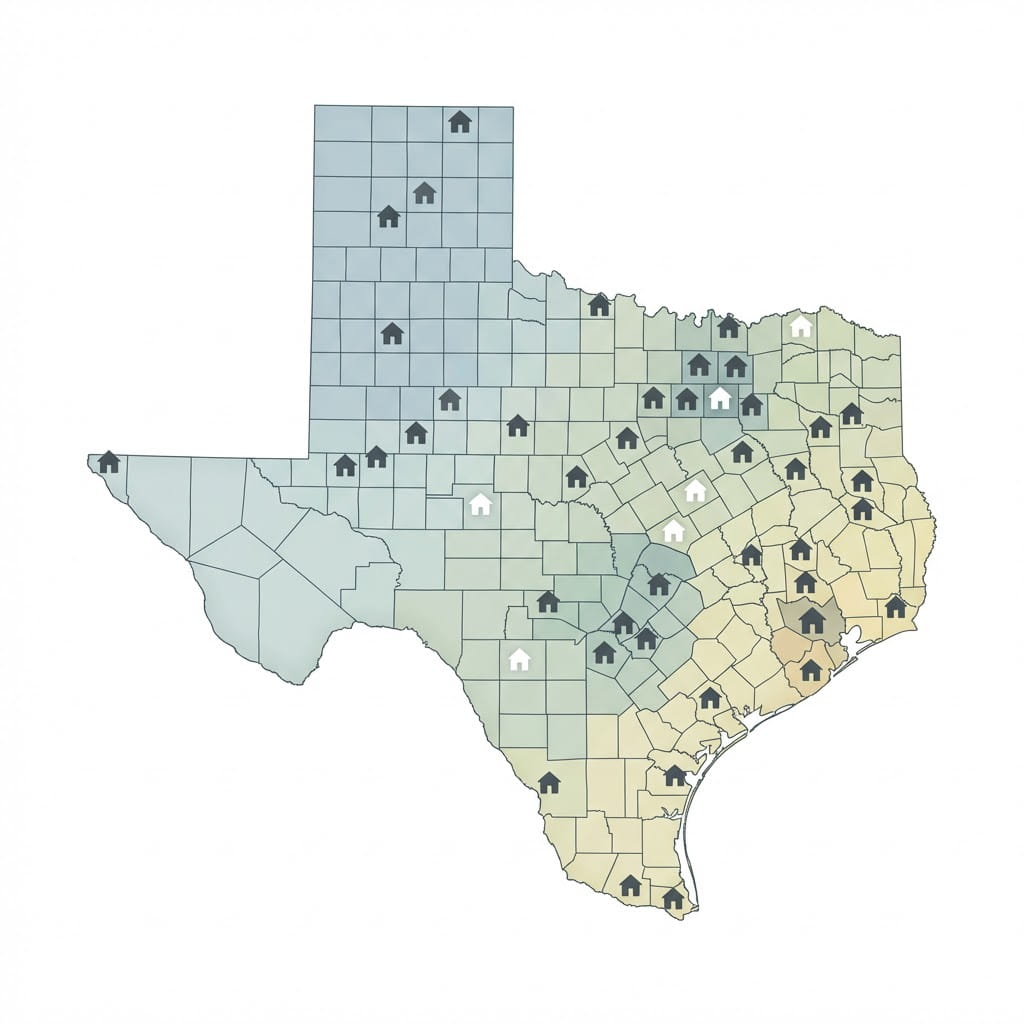
Understanding Texas Appraisal Districts (Without the Confusion)
Texas appraisal districts determine property values used to calculate property taxes, but many homeowners misunderstand their role. This guide explains how appraisal districts work and how they fit into the broader property tax system.

Key Takeaways:
- Every Texas county has an appraisal district.
- Appraisal districts determine property values.
- Taxing authorities set tax rates separately.
- Property taxes are based on both value and rate.
- Appraisal districts maintain property records.
- Annual notices show changes in assessed value.
- Mass appraisal models evaluate many homes at once.
- Comparable sales influence valuations.
- Property values may change annually.
- Understanding the system reduces confusion.
Understanding Texas Appraisal Districts (Without the Confusion)
Property taxes in Texas can feel complicated — and much of that confusion starts with one key piece of the system: appraisal districts.
Many homeowners hear the term but aren’t entirely sure what appraisal districts do or how they affect property taxes. Understanding their role can make the entire property tax process feel far less overwhelming.
Let’s break it down in simple terms.
What Is a Texas Appraisal District?
A Texas appraisal district is a local government entity responsible for determining the taxable value of properties within a specific county.
Each county in Texas has its own appraisal district. Their main job is to estimate property values that local taxing authorities use to calculate property taxes.
In short:
- Appraisal districts set property values
- Taxing entities set tax rates
This distinction is one of the most important things homeowners can understand.
What Appraisal Districts Actually Do
Appraisal districts have several key responsibilities that directly affect homeowners.
Determining Property Values
Their primary role is assigning an assessed value to each property based on available data and valuation methods.
Maintaining Property Records
They keep property data on file, including:
- Square footage
- Property features
- Lot size
- Property classifications
These records help inform assessments.
Sending Appraisal Notices
Each year, appraisal districts send notices that outline:
- Current assessed value
- Previous year’s value
- Any changes in valuation
These notices help homeowners stay informed.
Reviewing Property Protests
If homeowners choose to question their valuation, appraisal districts handle the review and protest process.
This helps maintain transparency within the system.
How Appraisal Districts Determine Value
Appraisal districts use a combination of methods to estimate property values.
Mass Appraisal Models
Because they evaluate thousands of properties, districts rely on mass appraisal techniques that use:
- Neighborhood sales data
- Market trends
- Automated valuation tools
This approach allows large-scale efficiency.
Comparable Property Analysis
Many valuations are based on comparable home sales in the area, often referred to as “comps.”
This helps create consistency across neighborhoods.
Property Data and Classifications
Property details like size, use, and features all influence assessed value. Accurate records are essential for fair valuation.
Why Appraisal Districts Can Feel Confusing
For many homeowners, appraisal districts feel complicated simply because of how the system is structured.
Some common sources of confusion include:
Multiple Agencies Involved
Property taxes involve different entities:
- Appraisal districts determine value
- Cities and schools set tax rates
This separation can make the process seem unclear.
Technical Terminology
Terms like “assessed value,” “market value,” and “taxable value” can be difficult to interpret without context.
Annual Notices
Receiving yearly notices with changing values can raise questions, especially when increases happen unexpectedly.
Understanding the structure behind the system helps reduce confusion.
The Difference Between Value and Taxes
One of the biggest misconceptions in Texas property taxes is assuming appraisal districts control how much you pay.
In reality:
- Appraisal districts determine value
- Local taxing authorities determine tax rates
Your final property tax bill is a combination of both.
Knowing this distinction helps homeowners better understand where changes come from.
Why Property Values Change Each Year
Many homeowners are surprised when their appraisal value changes annually. This is usually due to:
- Shifts in local housing markets
- New sales data
- Development trends
- Updated property records
Annual reassessments help keep valuations aligned with broader market conditions.
How Homeowners Can Stay Informed
Understanding appraisal districts doesn’t require deep expertise. A few simple habits can help homeowners feel more confident navigating the system.
Review Your Annual Notice
Appraisal notices provide insight into how your property value is changing year to year.
Check Property Records
Ensuring your property details are accurate can help you understand how valuations are calculated.
Learn Local Timelines
Knowing when notices are typically sent can help homeowners stay proactive.
A Clearer Perspective on Texas Property Taxes
Texas appraisal districts play a central role in the property tax system, but their responsibilities are often misunderstood.
By understanding that appraisal districts determine property values — while local governments set tax rates — homeowners can approach property taxes with more clarity.
The system may seem complex at first, but breaking it into simple parts makes it far easier to navigate.
And sometimes, understanding the structure is the first step toward feeling more confident about your property taxes.
Paying Too Much in Property Taxes?
Let our licensed property tax experts assess your tax bill for potential savings. Over 80% of protests get a reduction of more than $1,000 and it takes less than 3 minutes to enroll.
⏰
🏠
💵
FAQs
What does a Texas appraisal district do?
It determines property values used to calculate property taxes within a county.
Do appraisal districts set property tax rates?
No. They determine property values, while cities, schools, and other entities set tax rates.
Why does my property value change every year?
Changes often reflect market trends, new sales data, or updated property information.
Is there one appraisal district for all of Texas?
No. Each county has its own appraisal district.
How can homeowners understand their appraisal better?
Reviewing annual notices and property records can help clarify how values are determined.

Ryder Meehan
Ryder Meehan is the Co-Founder of TaxDrop and a Licensed Property Tax Protest Consultant