Why Texas Property Taxes Vary So Much by County
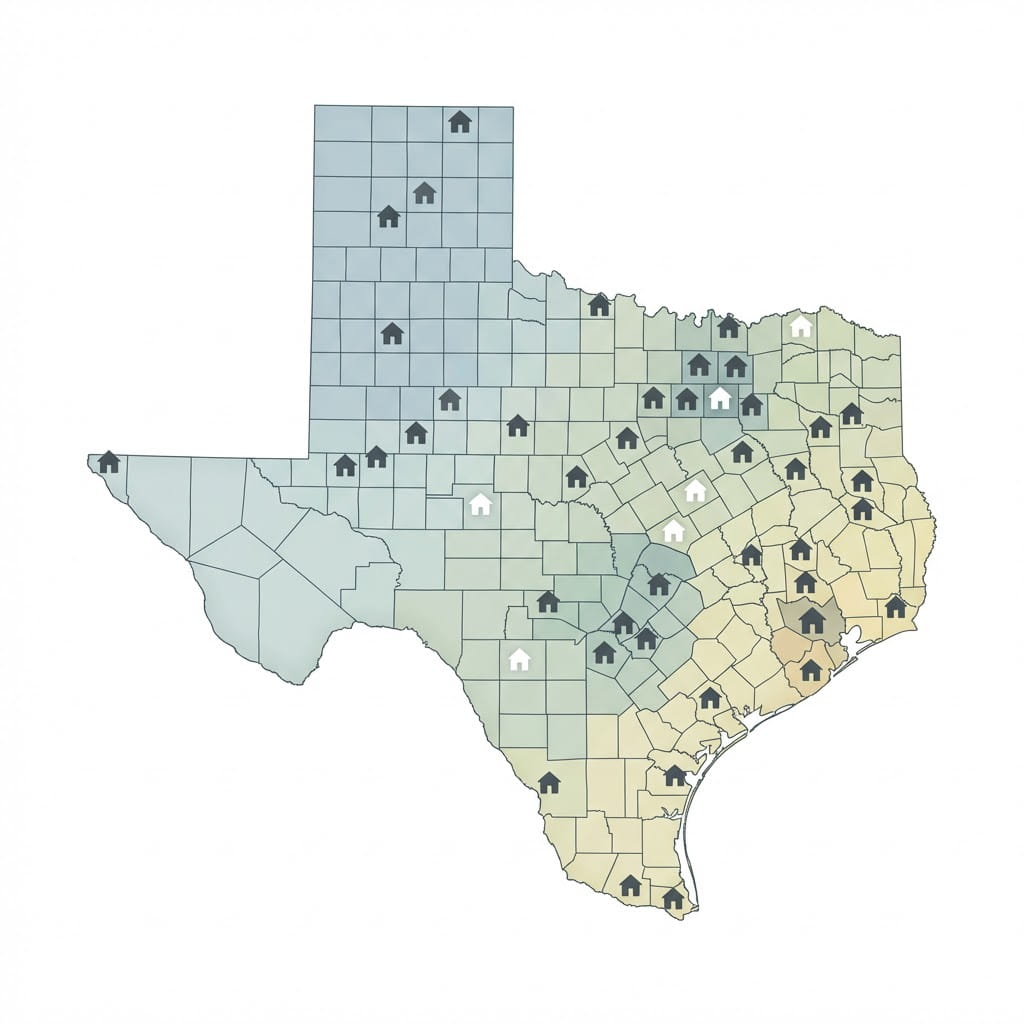
Texas property taxes vary widely by county due to local control, school funding needs, growth patterns, and infrastructure demands. This article explains the key factors that influence regional tax differences.
Key Takeaways:
- Texas property taxes are locally administered.
- School districts make up a large portion of tax bills.
- Tax rates vary by county and city.
- Local budgets influence tax structures.
- Property value and tax rate are separate factors.
- Growth patterns impact tax needs.
- Urban and rural counties differ significantly.
- Special districts can increase total taxes.
- County-level variation is normal in Texas.
- Understanding local factors improves clarity.
Why Texas Property Taxes Vary So Much by County
If you’ve ever compared property taxes across Texas, you may have noticed something surprising: two similar homes can have very different tax bills depending on the county.
This variation often confuses homeowners, especially those relocating within Texas or buying their first home. While the difference may seem random, Texas property tax variation is largely driven by local factors.
Understanding why property taxes vary by county can help homeowners better interpret their tax bills and make more informed decisions.
Property Taxes in Texas Are Locally Controlled
One of the biggest reasons for county-to-county differences is that Texas property taxes are primarily administered at the local level.
Unlike states with centralized property tax systems, Texas relies on local taxing authorities such as:
- School districts
- Counties
- Cities
- Special districts
Each of these entities sets its own tax rates based on local needs. This creates natural variation across regions.
School District Funding Plays a Major Role
School districts make up a significant portion of property tax bills in Texas. Because school funding relies heavily on local property taxes, areas with higher school funding needs may have higher tax rates.
Factors that influence school tax rates include:
- Student population size
- Infrastructure needs
- Local funding gaps
This is one of the largest contributors to property tax differences between counties.
Population Growth and Development
Rapidly growing areas often experience shifting tax dynamics. Counties experiencing population booms may invest heavily in infrastructure, roads, and public services.
These investments can influence local tax structures.
In fast-growing regions, higher demand for services can translate into higher tax rates compared to slower-growth counties.
Differences in Local Budgets
Each county sets its own budget priorities. Some areas may invest more in public services such as:
- Emergency response
- Transportation infrastructure
- Community development
Counties with higher spending needs may require higher property tax rates to support those services.
This creates natural variation in tax bills across regions.
Property Values and Tax Rates Don’t Always Move Together
One common misconception is that higher property values automatically mean higher tax rates.
In reality, property value and tax rate are separate factors.
Some counties may have:
- Higher home values but lower tax rates
- Lower home values but higher tax rates
This is why comparing property taxes requires looking at both assessed values and local tax rates.
Urban vs. Rural Differences
Urban and rural counties often have very different tax structures.
Urban areas may have:
- Higher service demands
- Larger infrastructure investments
- Greater population density
Rural areas, on the other hand, may have lower service costs but different funding structures.
These contrasts naturally influence tax variation.
Special Taxing Districts
Some areas include additional taxing entities such as:
- Utility districts
- Flood control districts
- Municipal improvement districts
These special districts can add layers to property tax bills that may not exist in neighboring counties.
Homeowners may not always realize these smaller districts are part of the total tax calculation.
Why This Matters for Homeowners
Understanding county-level differences can help homeowners:
- Set realistic expectations when moving
- Compare homes more accurately
- Understand year-over-year changes
- Interpret tax bills with more clarity
Without this context, property tax differences can feel unpredictable.
What Homeowners Should Keep in Mind
While county differences are normal, property taxes are still based on two key components:
- Assessed property value
- Local tax rates
Both factors influence the final tax bill.
Being aware of these components helps homeowners better understand how their taxes are determined.
A Clearer Perspective on Texas Property Taxes
Texas property taxes can vary widely, but they’re rarely random. Local control, school funding needs, growth patterns, and infrastructure investments all shape how property taxes are structured across counties.
By understanding the local nature of property taxes, homeowners can better interpret differences and approach their tax bills with greater clarity.
Sometimes, the biggest confusion comes from missing context — and understanding the “why” makes all the difference.
Paying Too Much in Property Taxes?
Let our licensed property tax experts assess your tax bill for potential savings. Over 80% of protests get a reduction of more than $1,000 and it takes less than 3 minutes to enroll.
⏰
🏠
💵
FAQs
Why are property taxes different in each Texas county?
Because property taxes are set locally by school districts, counties, cities, and special taxing authorities.
Do higher home values mean higher property taxes?
Not always. Tax bills depend on both assessed value and local tax rates.
Which factor affects Texas property taxes the most?
School district funding is one of the largest contributors to property tax differences.
Why do fast-growing areas have higher taxes?
Growing areas often require more infrastructure and public services, which can influence tax rates.
Are property tax differences normal in Texas?
Yes. County-level variation is expected due to local control over tax structures.

Ryder Meehan
Ryder Meehan is the Co-Founder of TaxDrop and a Licensed Property Tax Protest Consultant