

⏰
🏠
💵
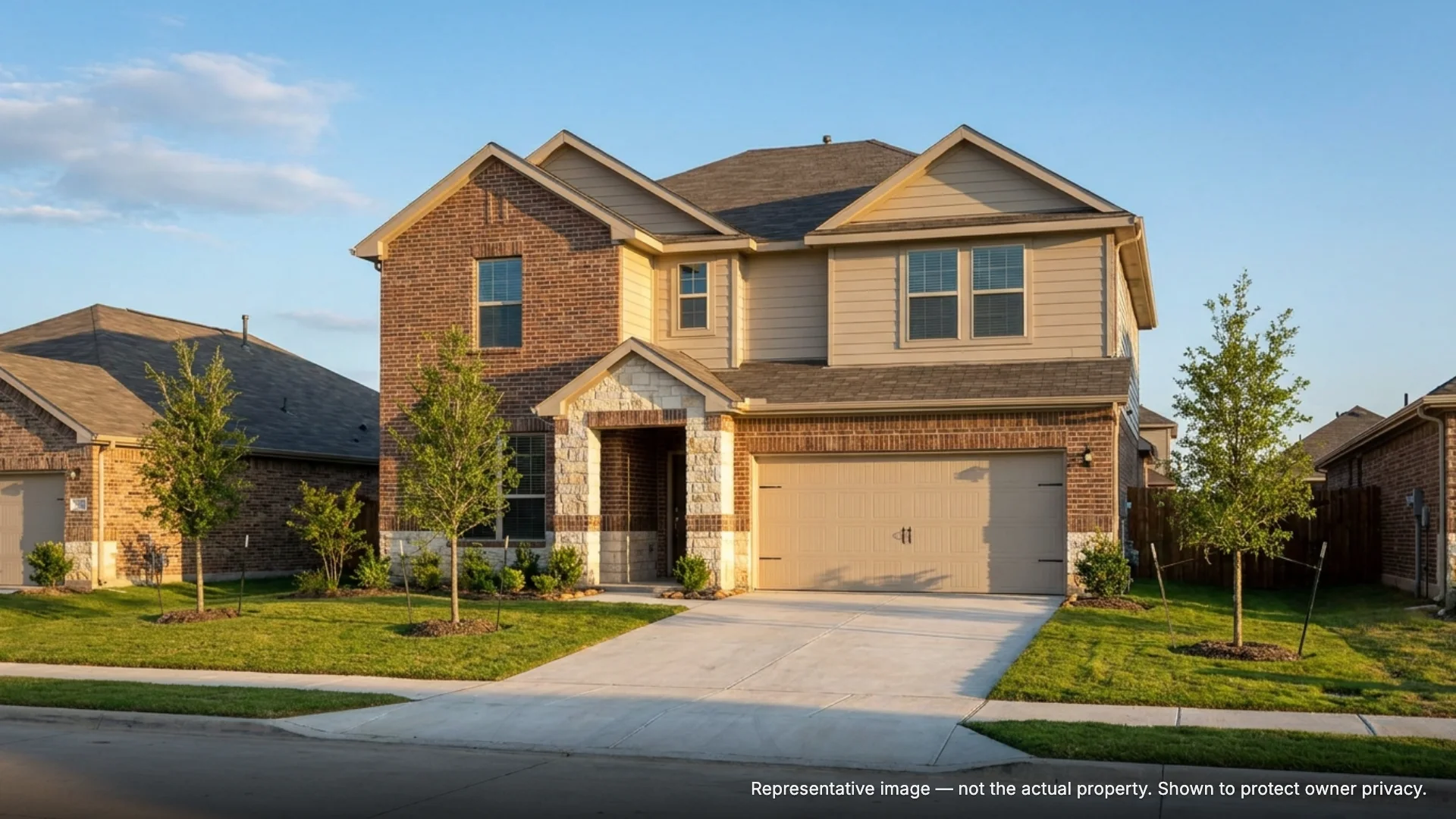
A single-family home in Fort Worth, Tarrant County, Texas. The owner came to TaxDrop after opening a 2026 Notice of Appraised Value from the Tarrant Appraisal District (TAD) showing a market value of $428,683.
Names and addresses are withheld. The figures below are the district's own recorded values.
The 2026 notice landed at $428,683 — a value frozen at the same number since 2024, carried forward each year without review. Nothing about the property had changed.
An over-assessment is not a one-year problem. Whatever value the district sets becomes the baseline the following year, and the year after that, so an unchallenged number compounds. In Tarrant County the combined tax rate across county, city, school and special districts runs about 2.19% of value, so every $50,000 of excess assessment costs roughly $1,096 a year.
Texas gives owners two grounds under Tax Code Chapter 41: market value that exceeds what the property would sell for (§41.41), and unequal appraisal — being assessed higher than comparable properties (§41.43).
Knowing the grounds is the easy part. The district appraiser arrives with a mass-appraisal model and its own comparable sales. An owner who brings a printout of neighbourhood listings does not move that number.
TaxDrop filed the protest and built the evidence packet:
The case resolved at the informal stage on a settlement waiver — the district accepted the evidence rather than sending it to the Appraisal Review Board.
The 2026 assessment came down from $428,683 to $332,370.
That is a $96,313 reduction — 22.5% — worth about $2,100 a year at Tarrant County's 2.19% combined rate.
Because the value carries forward as next year's starting point, the benefit repeats until the district raises it again.
It depends entirely on how far above market your assessment sits. This owner saved about $2,100 a year on a $96,313 reduction. A smaller gap on a smaller home saves proportionally less — the arithmetic is your reduction times the combined rate, roughly 2.19% here.
No. Filing a protest does not expose you to an increase — if the district does not agree to a reduction, your value simply stands. (New Jersey works differently; Texas does not.)
Often not. Many protests resolve at the informal stage or on a settlement waiver, as this one did. The formal ARB hearing is the backstop if the informal stage does not land.
Recent comparable sales with defensible adjustments, and equity comparables showing similar properties assessed lower. Photos of condition issues help. Opinions do not.
May 15, or 30 days after your Notice of Appraised Value is delivered, whichever is later. See TAD's forms and protest information and the Comptroller's property tax protest overview.
You can absolutely file yourself — the Comptroller's Taxpayer Remedies guide explains the process. The question is whether your evidence will hold up against a district appraiser's own analysis. That is what TaxDrop builds.
TaxDrop One is $129 per property, per tax year. We check whether you have a case before you pay, and tell you when you do not.
Start your Tarrant County property tax protest — or read how the process works in our how it works guide.