
Best Property Tax Appeal Companies in NJ (2026)
New Jersey is the only state where appealing can raise your assessment. Run the Chapter 123 ratio test first, then compare attorneys, self-filing and national firms for 2026.
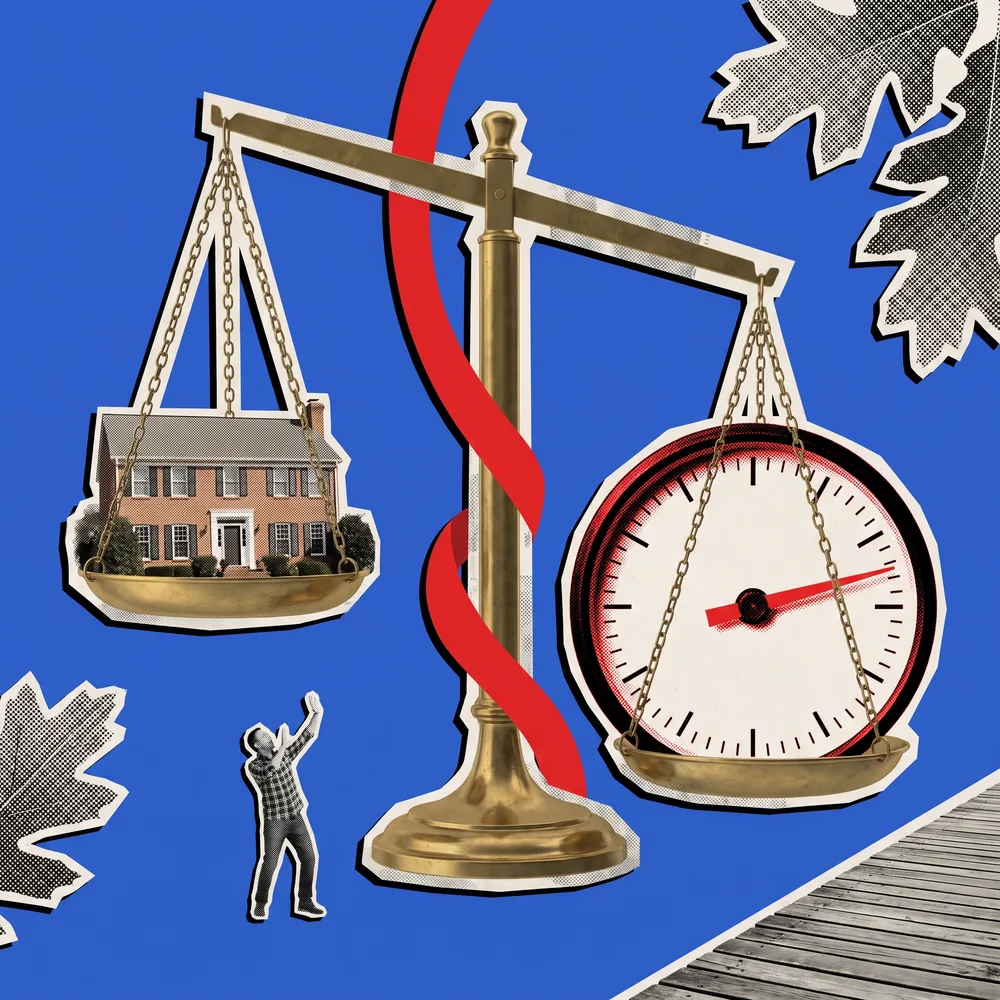
Key Takeaways:
- Filing can RAISE it — below the common level range the board must increase your assessment (N.J.S.A. 54:3-22)
- $5 – $150 — NJ filing fee, up front and non-refundable — the only state we serve that charges
- April 1 — deadline statewide — except Burlington, Gloucester and Monmouth
- January 15 — deadline in Burlington, Gloucester and Monmouth counties
- Sales only — comparable assessments are inadmissible as evidence in New Jersey
- $1,000,000 — assessed value above which the appeal routes to the NJ Tax Court
New Jersey is the hardest state in the country to appeal a property assessment in, and not because the paperwork is complicated. It is because New Jersey is the only state where filing can legally leave you worse off. The county board decides your case on a ratio test, not on what your house is worth, and if that test goes against you the board is required by statute to raise your assessment. This guide ranks the realistic options for a New Jersey homeowner or landlord in 2026 — starting with the test you have to run before you file anything.
TL;DR
- Run the Chapter 123 ratio test before you file. Above the common level range your assessment comes down; inside it nothing moves however over-assessed you look; below it the county board must raise it (N.J.S.A. 54:3-22).
- New Jersey is the only state that charges you to file — $5 to $150 by assessed value, up front and non-refundable, win or lose.
- The deadline is April 1 — except in Burlington, Gloucester and Monmouth, which file by January 15, and any town that ran a district-wide revaluation, which moves to May 1.
- Local attorneys are for Tax Court cases above $1,000,000; national firms fit landlords with out-of-state parcels.
- Comparable assessments are inadmissible in a New Jersey appeal. Sales only — there is no unequal-appraisal or uniformity claim here.
TaxDrop currently serves Texas property owners only. We're coming to New Jersey — join the New Jersey waitlist and we'll let you know when we launch.
Why this matters
A note on wording: most people search for a “property tax protest company,” but New Jersey has no protest. Your municipal Assessor sets the value, and you file an appeal — a Petition of Appeal, Form A-1 — with your County Board of Taxation. There is no county assessor in New Jersey. The rest of this guide uses New Jersey’s terms.
New Jersey assesses property once, then adjusts the tax rate around that number every year — so an over-assessment from 2023 or 2024 keeps costing you money in 2026 until someone appeals it. What makes the state unusual is the test the board applies. It is not “is this house worth less than the assessment.” It is Chapter 123, and it compares your assessment-to-market ratio against your municipality’s common level range.
Miss your filing deadline and you wait another full tax year. Most of New Jersey files by April 1, but Burlington, Gloucester and Monmouth counties file by January 15 — two and a half months earlier, per Form A-1’s own instruction 1(a) — and a town that completed a district-wide revaluation moves to May 1. In every case the real rule is the stated date or 45 days after the municipality finishes mailing assessment notices, whichever is later. Check your county before you trust any date on this page.
Best for high-value Tax Court appeals: a local NJ property tax attorney. Best lowest-cost option for a simple correction: filing directly with your County Board of Taxation, once the ratio test checks out.
Before you hire anyone: the test that decides your case
Chapter 123 has three outcomes, and only one of them is the one people expect.
- Your ratio is above the common level range. The assessment comes down to market value times the average ratio. This is the win.
- Your ratio is inside the range. Nothing happens. The board affirms the assessment even if your house is demonstrably worth less than the number on it. You are out the filing fee and the year.
- Your ratio is below the range. The board is required by statute to increase your assessment to market value times the average ratio. Not permitted — required, under N.J.S.A. 54:3-22.
That third branch is why generic “you have nothing to lose, just file” advice is wrong in New Jersey and right almost everywhere else. A homeowner whose assessment is comfortably under market can walk into a county board and walk out with a higher one. The upside is capped by the ratio; the downside is not theoretical.
Two more New Jersey rules worth knowing before you pick a service. First, comparable assessments are inadmissible — you cannot argue “the identical house next door is assessed for less.” That argument exists in Texas and Georgia; it does not exist here. Sales evidence only. Second, if you are behind on property taxes, the board can dismiss the appeal outright until the account is current.
What makes the best property tax appeal company in New Jersey
- New Jersey-specific track record, not just a national average win rate
- Willingness to tell you not to file. In New Jersey that is the single most valuable thing a service can do, and a contingency firm has no reason to do it.
- Licensed representation where state rules require it, particularly for Tax Court filings over $1,000,000 in assessed value
- Correct per-county deadline handling - a service that quotes April 1 to a Monmouth homeowner is 10 weeks late
- Evidence quality, meaning real comparable sales and, for rentals, an income-approach analysis — never comparable assessments, which the board will not accept
- Coverage for rental and investment property, not just owner-occupied homes
Compare NJ property tax appeal options at a glance
TaxDrop (coming soon)
- Not available in New Jersey yet. TaxDrop currently serves Texas only. Join the New Jersey waitlist.
Local NJ property tax attorney
- Best for: High-value or Tax Court appeals
- Standout feature: Legal representation required above $1,000,000 assessed value
- Key limitation: Slower process, requires vetting a specific attorney
County Board of Taxation self-filing
- Best for: Simple, low-complexity corrections
- Standout feature: No professional fee — but the county still charges $5–$150 to file
- Key limitation: You build the comparable-sales case and run the ratio test yourself
National multi-state tax appeal firms
- Best for: Landlords with property in several states
- Standout feature: One point of contact across state lines
- Key limitation: Often less depth on NJ-specific county rules
Independent NJ-licensed appraiser
- Best for: Homeowners who want a standalone report
- Standout feature: Formal appraisal to support a self-filed case
- Key limitation: You still have to file and argue the appeal
TaxDrop: coming soon to New Jersey
TaxDrop currently serves Texas property owners only, so it isn't an option you can buy in New Jersey today. Join the New Jersey waitlist and we'll let you know when we launch.
2. Local NJ property tax attorney: best for high-value Tax Court appeals
New Jersey routes appeals on properties assessed above $1,000,000 directly to the state Tax Court instead of the county board, and that venue calls for legal representation, not a standard consultant filing. A local attorney who has argued cases in your specific county tax court carries more weight than a national generalist.
Local attorney pros:
- Only path with standing to argue directly at the NJ Tax Court
- Useful for complex commercial or multi-parcel disputes
- Can negotiate a settlement with the municipality's attorney before trial
Local attorney cons:
- Billing structure varies by firm - confirm hourly versus contingency terms before signing
- Case timelines run longer than a standard county board appeal
Best for: owners of properties assessed well above $1,000,000 or facing a contested commercial valuation.
Verdict: hold - skip this route unless your assessed value actually clears the Tax Court threshold.
3. County Board of Taxation self-filing: best low-cost option for a simple fix
Every one of New Jersey's 21 counties runs its own board of taxation, and any homeowner can file a petition directly without hiring anyone. This works best when the error is straightforward - a data mistake on square footage, or a handful of clearly lower comparable sales nearby.
Self-filing pros:
- No professional fee — though the county's own $5–$150 filing fee still applies
- Full control over which comparable sales and evidence you present
- Reasonable for a first-time appeal on a modest overassessment, once the ratio test checks out
Self-filing cons:
- You research comparable sales, run the Chapter 123 ratio test, and build the case with no professional review
- Missing your county's deadline forfeits the appeal for the year — and that date is January 15, not April 1, in Burlington, Gloucester and Monmouth
- The filing fee is non-refundable, so a petition that turns out to sit inside the common level range costs you money for nothing
- Boards see a high volume of poorly-supported petitions and can dismiss weak ones quickly
Best for: homeowners with a simple, well-documented case and time to spend before the deadline.
Verdict: wait - try this route first only if the fix is genuinely simple; escalate to a done-for-you service if the county pushes back.
4. National multi-state tax appeal firms: best for landlords with out-of-state holdings
Landlords who own rental units in New Jersey and also in states like Texas, Florida, or Georgia sometimes prefer a single firm managing every property. That convenience trades off against local depth - county-specific ratio studies and township quirks matter in New Jersey more than a generalized national process accounts for. If you're weighing whether the appeal is even worth it on a vacation home or rental property, that math changes by state.
National firm pros:
- One contact for portfolios spanning multiple states
- Standardized process across every property
- Useful for owners managing a dozen or more units
National firm cons:
- Less familiarity with individual New Jersey county board procedures
- Slower to adapt filings to a specific township's reassessment cycle
Best for: landlords with rental property in New Jersey plus at least one other state.
Verdict: hold - fine for scale, but a NJ specialist usually wins more on in-state parcels alone.
5. Independent NJ-licensed appraiser: best for a standalone valuation report
An independent appraisal doesn't file the appeal for you - it gives you a formal, defensible number to attach to a self-filed petition or hand to an attorney. This matters most when the county's assessed value looks disconnected from what your home would actually sell for today.
Independent appraiser pros:
- Produces a formal report that carries weight with a county board
- Useful backup evidence for a self-filed or attorney-led appeal
- Independent of the outcome - the appraiser has no stake in whether you win
Independent appraiser cons:
- Doesn't file or argue the appeal for you
- Adds a step and a separate professional to coordinate before the deadline
Best for: homeowners who want third-party documentation before filing their own case.
Verdict: wait - pair this with self-filing or an attorney rather than treating it as a full solution.
How we ranked
Each option was measured against the six criteria above: New Jersey-specific track record, fee structure, licensing fit, deadline handling, evidence quality, and rental-property coverage. The other four options each solve for one specific gap it doesn't cover: Tax Court standing, lowest out-of-pocket, multi-state scale, or standalone appraisal documentation.
Which New Jersey property tax appeal option should you choose?
For a standard owner-occupied home in New Jersey, start with the ratio test rather than with a vendor. If your assessed value clears $1,000,000, the case goes to the Tax Court and you want a local attorney with NJ Tax Court experience. Landlords juggling property across several states should weigh a national firm against a NJ specialist per parcel, not as a blanket decision.
Check your NJ property tax bill
Run the Chapter 123 ratio test on your parcel before you spend the filing fee.
FAQ
What's the best property tax appeal company in New Jersey?
Attorneys make more sense once assessed value clears $1,000,000 and the case routes to Tax Court.
How much does it cost to appeal property taxes in New Jersey?
New Jersey charges you to file: $5 to $150 depending on assessed value, paid up front and non-refundable whatever the outcome. Attorney fee structures vary — confirm hourly versus contingency before signing.
What is the deadline to file a property tax appeal in New Jersey?
April 1 for most of the state — but Burlington, Gloucester and Monmouth counties file by January 15, and any township that completed a district-wide revaluation moves to May 1. In each case the rule is that date or 45 days after the municipality finishes mailing assessment notices, whichever is later. Missing it forfeits the appeal until the next tax year, so confirm your own county rather than relying on the statewide figure.
Can I appeal my property taxes in New Jersey myself?
Yes — any homeowner can file a Form A-1 Petition of Appeal directly with their County Board of Taxation. You still pay the county's $5–$150 filing fee, and you are responsible for gathering comparable sales and checking the Chapter 123 ratio yourself. Comparable assessments will not be accepted as evidence.
Does New Jersey require a licensed attorney to represent me at the County Board?
An individual homeowner can represent themselves at the County Board of Taxation — no attorney required. The picture changes for business entities such as an LLC or corporation, which generally must appear through counsel, and for any appeal that proceeds to the New Jersey Tax Court. If you hold the property in an entity rather than your own name, check before the deadline rather than at the hearing.
Can a New Jersey appeal make my assessment go up?
Yes, and this is the part most guides leave out. Under N.J.S.A. 54:3-22, if your assessment-to-market ratio falls below your municipality's common level range, the county board is required to raise the assessment to market value times the average ratio. If your ratio sits inside the range the board simply affirms the existing assessment, and you have spent the non-refundable filing fee for no change. Only a ratio above the range produces a reduction. Run that test before you file — New Jersey is not a state where filing is a free option.
Do landlords need a different appeal process for rental property in New Jersey?
The filing route is the same County Board of Taxation petition, but the evidence differs — rental valuations often lean on income-approach data rather than comparable sales alone. The Chapter 123 ratio test applies to rentals exactly as it does to homes, including the branch that raises the assessment. Landlords with property outside New Jersey should weigh a multi-state firm against a state specialist per parcel.
One last thing
Chapter 123 compares your assessment ratio to your municipality's common level range, not your house to the market. Two identical homes in neighbouring towns can therefore have opposite outcomes on the same facts — one wins a reduction, the other gets an increase. Look up your municipality's ratio before you decide anything else on this page. It is the only number that determines which of the three outcomes you are in.
Related guides
- Best property tax protest companies in Florida in 2026
- Best 7 property tax protest companies in Texas in 2026
- Best property tax protest companies in Georgia in 2026
- Is it worth appealing property taxes on a vacation home?
Ready to lower your bill? TaxDrop isn't in New Jersey yet — join the New Jersey waitlist.
Paying Too Much in Property Taxes?
Let our licensed property tax experts assess your tax bill for potential savings. 92% of Texas protests we closed in 2026 got a reduction. It takes less than 3 minutes to enroll.
⏰
🏠
💵
No Savings No Fee
FAQs
Can appealing raise my property taxes in New Jersey?
Yes. Under N.J.S.A. 54:3-22, if your assessment-to-market ratio falls below your municipality's common level range, the county board is required to raise your assessment. If the ratio sits inside the range the board affirms the existing assessment and you are out the non-refundable filing fee. Only a ratio above the range produces a reduction. New Jersey is not a state where filing is a free option.
What is the deadline to appeal property taxes in New Jersey?
April 1 for most of the state, but Burlington, Gloucester and Monmouth counties file by January 15, and a township that completed a district-wide revaluation moves to May 1. In each case the rule is that date or 45 days after the municipality finishes mailing assessment notices, whichever is later. Confirm your own county — the statewide figure is wrong for three of them.
How much does it cost to appeal property taxes in New Jersey?
New Jersey charges $5 to $150 to file, depending on assessed value, paid up front and non-refundable whatever the outcome.
What is the Chapter 123 ratio test?
It is how New Jersey decides appeals. Rather than comparing your home to the market, it compares your assessment-to-market ratio against your municipality's common level range. Above the range the assessment comes down, inside it nothing changes, below it the assessment goes up. Two identical homes in neighbouring towns can get opposite outcomes on the same facts.
Can I use comparable assessments as evidence in New Jersey?
No. Comparable assessments are inadmissible in a New Jersey appeal — you cannot argue that the identical house next door is assessed for less. Sales evidence only. The unequal-appraisal or uniformity argument exists in Texas and Georgia, not here.
Do I need a lawyer to appeal in New Jersey?
An individual homeowner can represent themselves at the County Board of Taxation. Business entities such as an LLC or corporation generally must appear through counsel, and any appeal that proceeds to the New Jersey Tax Court needs an attorney. If you hold the property in an entity, check before the deadline rather than at the hearing.

Ryder Meehan
Ryder Meehan is the Co-Founder of TaxDrop and a Licensed Property Tax Protest Consultant