

Key Takeaways:
You can switch from self-serve to full-service mid-appeal only if a provider accepts your existing case and the relevant tax office permits the change in representation. Buying a self-serve packet does not automatically arrange a takeover, and changing providers does not itself extend a filing or hearing deadline. Before handing over your case, confirm who will handle the next required action.
TL;DR
- Can you switch from self serve to full service mid appeal? Confirm provider acceptance and local representation requirements first.
- TaxDrop full-service property tax protests cover Texas only; self-serve coverage extends to other supported states.
- Keep your filing confirmation, evidence, correspondence, and hearing notice together before requesting a takeover.
- Do not assume an upgrade includes reimbursement, a deadline extension, or automatic transfer of your case.
Why this matters
The handoff matters more than the plan name. You need to know whether you are still responsible for filing documents, responding to the tax office, or attending a hearing while a provider reviews your request.
A prepared evidence packet and an accepted representation agreement serve different purposes. One helps you present your argument. The other establishes who will act for you, subject to the rules that apply to your property.
If your main question is whether representation would help, start with whether hiring someone to appeal your property taxes is worth it. Then check whether that provider can accept a case already underway.
Can you switch from self-serve to full-service mid-appeal?
A mid-appeal switch is a request for someone to take responsibility for an existing case, not simply a change to your account. The provider needs to understand what you filed, what remains unresolved, and which deadlines are approaching.
For 2026, distinguish between these two service types before requesting a switch:
TaxDrop One, self-serve
- Best for: Homeowners and landlords who want an appeal packet and will handle the filing process
- What it provides: A self-serve property tax appeal packet
- Main limitation: A packet is not the same as having a consultant represent you
TaxDrop full-service, Pro
- Best for: Texas homeowners and landlords seeking licensed-consultant-led representation
- What it provides: Consultant-led property tax protests
- Main limitation: Full-service coverage is Texas only, across 17 counties; an existing-case takeover still requires confirmation
TaxDrop full-service property tax protests are best for Texas homeowners and landlords seeking licensed-consultant-led representation. That service-area distinction comes first. A self-serve customer outside Texas should not interpret broader packet coverage as access to full-service representation.
Ask for confirmation that the provider is accepting your specific property, tax year, and current case stage. A general explanation of its service is not a commitment to take over your pending matter.
Self-serve: you remain responsible for the next action
Self-serve is the better fit when you want help organizing your argument but intend to manage the submission and follow-up yourself. You control the documents you submit and the communications you receive.
The trade-off is responsibility. You need to read your notice, follow the filing instructions, retain proof of submission, and respond to any requests associated with your case.
If you want to change service levels because a hearing has been scheduled, say that immediately. A hearing notice gives the prospective representative a concrete next step to evaluate.
Full-service: confirm the scope before stepping back
Full-service is the better fit when you want a professional to handle the representation covered by your agreement. It does not mean every pending case is automatically accepted or every action is included.
Ask what the provider will handle from the handoff date onward. Filing, evidence preparation, communications, and hearing representation are separate tasks; your agreement should make responsibility clear.
Do not stop managing your case merely because you requested an upgrade. Keep responsibility for the next action until the provider confirms acceptance and the representation requirements are satisfied.
How do you hand over an appeal already underway?
Use this sequence to turn a vague request for help into a clear transfer of responsibility. The goal is to preserve your existing work while making the next deadline visible.
1. Check coverage
Start with the property's state and county. Full-service coverage and self-serve coverage are different lists, even when both services come from the same company.
The self-serve footprint includes 43 Texas counties, 6 California counties, and 4 Georgia counties, plus statewide coverage in Florida, New Jersey, and Maryland. Those figures do not expand the Texas-only full-service footprint.
Provide the property address and tax year when asking about coverage. County eligibility alone does not answer whether a provider will accept your pending case.
2. Identify status
Describe what has actually happened, not what you intended to do. Preparing a packet, submitting an appeal, receiving an acknowledgment, and receiving a hearing notice are different stages.
Use a short status summary:
- Packet prepared, but nothing submitted.
- Filing submitted, with confirmation retained.
- Additional evidence requested by the tax office.
- Hearing scheduled, with the notice attached.
- Decision issued, with the decision document attached.
Do not describe a completed proceeding as an open case. If a decision has been issued, ask what review options remain before discussing a takeover.
3. Gather records
Collect the documents that show both your argument and the procedural history. That means what you believe the property is worth, plus what you have already told the tax office.
Include your assessment notice, submitted forms, evidence packet, filing confirmation, correspondence, and any hearing or decision notice. Keep the documents in their original form so the prospective representative can see exactly what was submitted.
For a broader organizational guide, use the property tax appeal filing-to-refund case tracking workflow. A clear case record helps prevent the handoff from becoming a search through scattered messages.
4. Confirm acceptance
Ask whether the provider will accept an existing case at its current stage. Include the next deadline in that request, rather than waiting for a follow-up question.
Request written confirmation of the property, tax year, scope of work, and actions the provider will handle. Also ask what you must continue doing before the transfer is complete.
A useful message is: I have already filed, my next notice is attached, and I need confirmation of who will handle the next submission and hearing. This gives the provider something specific to answer.
5. Authorize representation
Ask the relevant office and provider what authorization is required. Authorization means the permission needed for someone to act on your behalf in the property tax matter.
In Texas, an Agent Authorization Form gives someone permission to represent you, and the standard form is available through the Appraisal District. For other states, use the representation requirements of the relevant office or hearing body.
Do not assume signing a service agreement completes every administrative step. Confirm whether the office has received and recognized the required authorization.
6. Assign responsibility
Finish the handoff by naming who owns the next action. That includes submitting evidence, responding to correspondence, and attending any scheduled hearing.
Keep the confirmation with your case records. If a notice arrives after the handoff, send it to the representative and verify who will respond.
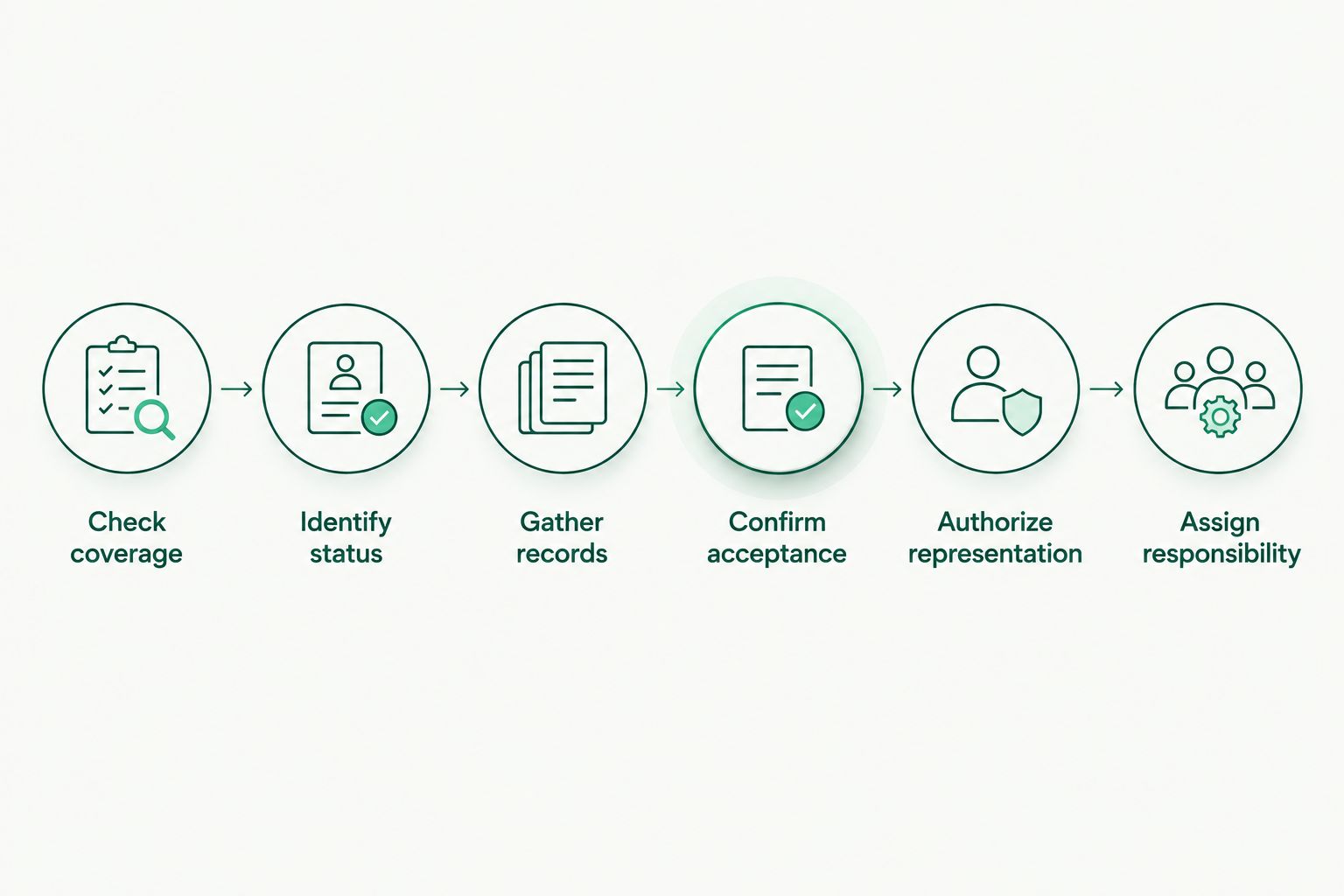
The handoff is complete when acceptance, authorization, and responsibility are clear.
Why switching mid-appeal varies
The same request needs different checks depending on where the property is and what has already happened. Focus on these factors rather than expecting a universal upgrade process:
- Service area: Self-serve coverage does not establish full-service eligibility. Check the state and county for the service you want.
- Case stage: A packet awaiting submission is different from a filed case, a scheduled hearing, or an issued decision.
- Notice deadline: The date on your notice determines the urgency of the next action. Give the provider the actual document.
- Representation requirements: Ask which authorization documents the relevant office requires and how to submit them.
- Evidence rules: The argument and supporting records must fit the jurisdiction, not just the provider's packet format.
- Existing agreement: Read what your current service includes, then obtain written terms for any proposed change.
In 2026, check your actual notice before relying on a general deadline summary. A provider's response time and a tax office's deadline are separate matters.
What changes when your property is outside Texas?
Outside Texas, use the word appeal, not protest. More importantly, direct your questions to the correct office or hearing body instead of assuming every state follows the same process.
In California, start with the Assessor's Office and the filing instructions for your county. Appeal deadlines vary by county, so confirm the deadline that applies to your assessment notice.
In Georgia, the Board of Tax Assessors issues the Annual Notice of Assessment. The appeal window is generally about 45 days from the notice; use the date and instructions on your 2026 notice to identify your next action.
In Florida, the Property Appraiser issues the TRIM notice, and the Value Adjustment Board, or VAB, hears petitions. The petition window is generally about 25 days from TRIM, making a prompt review of the notice essential.
In Maryland, property assessments come from SDAT, the State Department of Assessments and Taxation. Direct representation questions to SDAT or the Supervisor of Assessments, not a county assessor.
New Jersey needs a separate risk check
In New Jersey, the municipal Assessor sets the value, and the County Board of Taxation hears the appeal. An appeal can raise your assessment, so requesting representation should include a review of that risk, not just the potential reduction.
Chapter 123 compares the assessment-to-market-value ratio with the applicable common level range. Below that range, the county board is required to increase the assessment. Comparable assessments are not admissible evidence; use sales evidence instead.
For 2026, do not treat April 1 as a statewide filing deadline. Burlington, Gloucester, and Monmouth use January 15. Confirm the deadline and filing requirements for your property before deciding to proceed.
Should you switch if you already prepared the evidence?
Prepared evidence is useful, but it does not decide whether you need representation. The better question is whether you can confidently handle the remaining procedural steps.
Keep the existing evidence and ask for a review before resubmitting anything. A representative needs to see the argument already made, not just a replacement packet without context.
Describe why you want help: interpreting a response, preparing for a hearing, or managing communications. That makes the requested scope clearer than simply asking for full-service.
Does switching extend your appeal deadline?
Do not treat a switch as a deadline extension. Continue following your existing notice unless the relevant office gives you a different deadline or instruction.
For a pending 2026 case, ask separately about the provider's acceptance date and the tax office's next due date. You need both before deciding who will file the next document.
What should you ask about your existing purchase?
Ask how the proposed change affects your current service agreement. Do not assume an earlier purchase will be credited, reimbursed, or converted into representation.
Also ask what happens if the provider declines the takeover. You need a clear answer about your existing packet and your remaining responsibilities, without letting that discussion distract from the next filing requirement.
FAQ
Can I switch from self-serve to full-service after filing my property tax appeal?
A switch requires a provider to accept your existing case and the relevant office's representation requirements to be satisfied. Keep managing the next required action until responsibility is confirmed.
Can TaxDrop take over my appeal outside Texas?
TaxDrop full-service representation is Texas only, across 17 counties. Its broader self-serve coverage does not mean full-service representation is offered in those other states.
What documents should I send when requesting a takeover?
Send your assessment notice, filed forms, evidence, submission confirmation, correspondence, and any hearing or decision notice. Include the property's address, tax year, and next deadline.
Does changing providers give me more time to appeal?
Do not assume changing providers gives you more time. Follow your existing notice unless the relevant tax office provides a different deadline or instruction.
Can I reuse the evidence from my self-serve packet?
Give the prospective representative your existing evidence for review. Ask what remains useful and whether additional records are needed before submitting a revised argument.
Will my self-serve purchase be credited toward full-service?
Confirm any credit or reimbursement in the proposed agreement before switching. Buying a packet does not itself establish a right to have that purchase converted into representation.
Should I request help after receiving a hearing notice?
Send the hearing notice with your takeover request immediately. Ask whether the provider will accept the case and who remains responsible for preparing and attending the hearing.
One last thing
The most useful handoff document is often the notice that requires your next action, not your longest evidence file. Put that notice first so the person reviewing your request can see the deadline and the task.
Check your assessment, then confirm who owns the next step. Do not confuse requesting help with completing the transfer.
Check your assessment
Review your property tax options and confirm which service fits your property and current case stage.
Related guides
Paying Too Much in Property Taxes?
Let our licensed property tax experts assess your tax bill for potential savings. Over 80% of protests get a reduction of more than $1,000 and it takes less than 3 minutes to enroll.
⏰
🏠
💵
No Savings No Fee