

⏰
🏠
💵
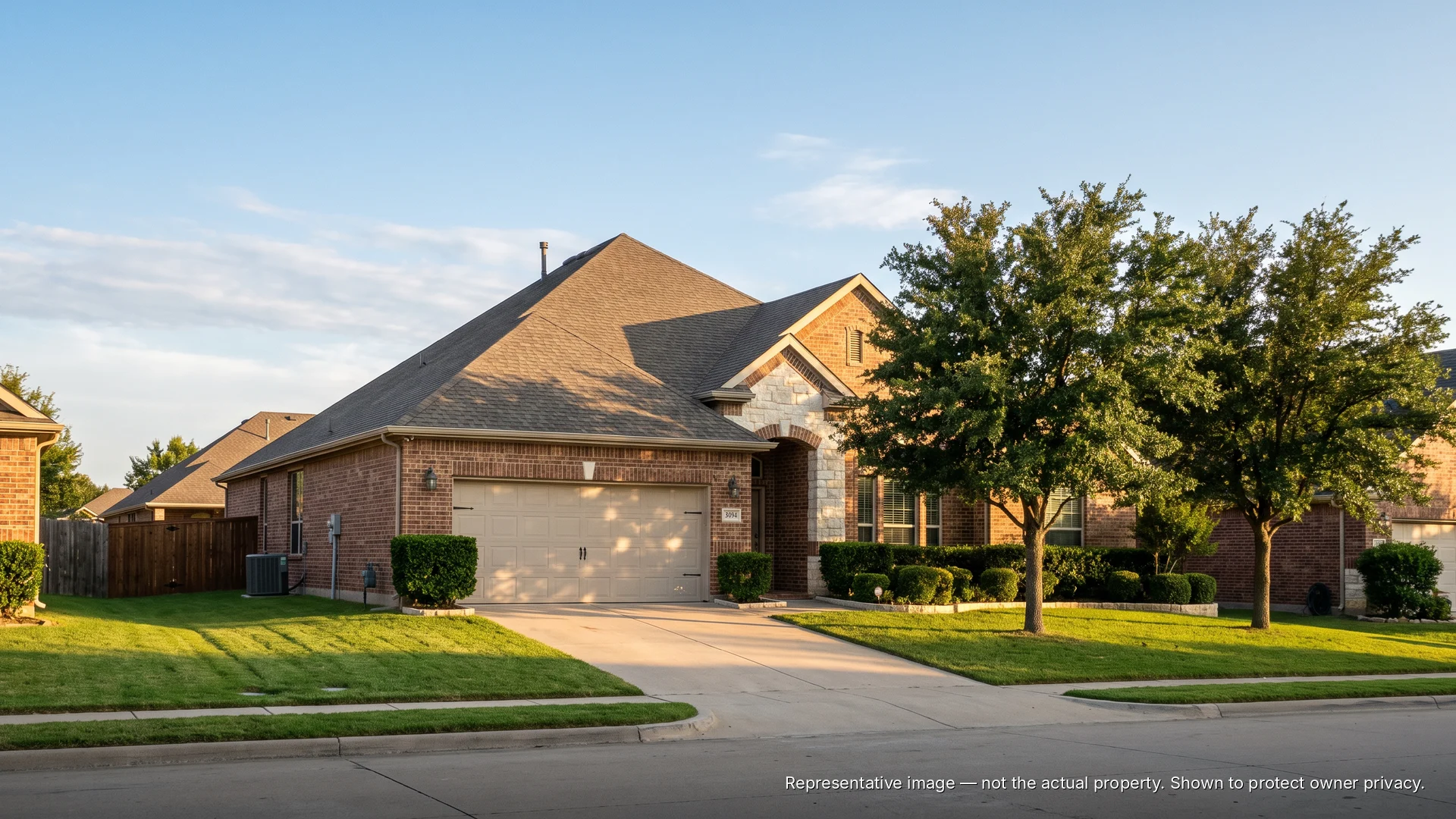
A single-family home in Benbrook, Tarrant County, Texas. The owner came to TaxDrop after opening a 2026 Notice of Appraised Value from the Tarrant Appraisal District (TAD) showing a market value of $437,466.
Names and addresses are withheld. The figures below are the district's own recorded values.
The notice landed at $437,466 — the exact same figure the district had used in 2024 and 2025. Three years, one number.
A value that never moves is a sign the district is not looking closely at the property. Neighbouring homes had been reassessed in the meantime, and many of them were carried at lower values per square foot.
An over-assessment is not a one-year problem. Whatever value the district sets becomes the starting point for next year, so an unchallenged number compounds. At a combined tax rate of about 2.19%, every $50,000 of excess taxable value costs roughly $1,095 a year.
Texas gives owners two grounds under Tax Code Chapter 41: market value that exceeds what the property would sell for (§41.41), and unequal appraisal — being assessed higher than comparable properties (§41.43).
Tarrant County reappraises on a cycle, and in the off years values often roll forward untouched. Owners tend to read a flat value as a good sign. It only means nobody checked.
TaxDrop filed the protest and built the evidence packet, with the weight on equity:
The final value of $370,920 matched the level the equity evidence supported.
The 2026 assessment came down from $437,466 to $370,920.
That is a $66,546 reduction — 15.2%.
Estimated tax savings: about $1,450 a year at a 2.19% combined rate.
Because the value carries forward as next year's starting point, the benefit repeats until the district raises it again.
It depends on how far above market your assessment sits — and, for homesteads, how the new value compares with your capped taxable value. This owner saved about $1,450 a year. The arithmetic is the drop in taxable value times your combined rate.
No. Filing a protest does not expose you to an increase — if the district does not agree to a reduction, your value simply stands.
Often not. Many protests resolve at the informal stage or on a settlement waiver. The formal ARB hearing is the backstop, and TaxDrop handles hearings by phone or video.
Recent comparable sales with defensible adjustments, and equity comparables showing similar properties assessed lower. Photos of condition issues help. Opinions do not.
May 15, or 30 days after your Notice of Appraised Value is delivered, whichever is later. See TAD's website and the Comptroller's property tax protest overview.
You can absolutely file yourself — the Comptroller's Taxpayer Remedies guide explains the process. The question is whether your evidence will hold up against a district appraiser's own analysis. That is what TaxDrop builds.
We check whether you have a case before you pay, and tell you when you do not. See pricing for the options.
Start your Tarrant County property tax protest — or read how the process works in our how it works guide.