
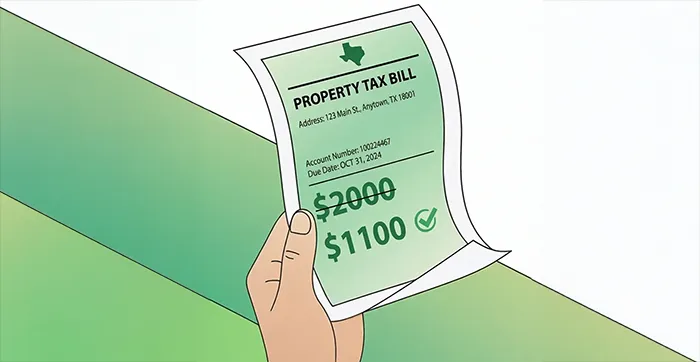
Kimble County homeowners pay a median of $2,173 a year in property taxes. If Kimble CAD has your home valued too high, you're paying more than your share. We fix that.
✔ Protests Made Simple - quick, easy, and accurate
✔ Licensed Tax Pros - Texas experts
✔ Free Savings Check - see if you're over-assessed in minutes
⏰
🏠
💵
Kimble County homeowners pay a median of $2,173 a year in property taxes. If Kimble CAD has your home valued too high, you're paying more than your share. We fix that.
✔ Protests Made Simple - quick, easy, and accurate
✔ Licensed Tax Pros - Texas experts
✔ Free Savings Check - see if you're over-assessed in minutes
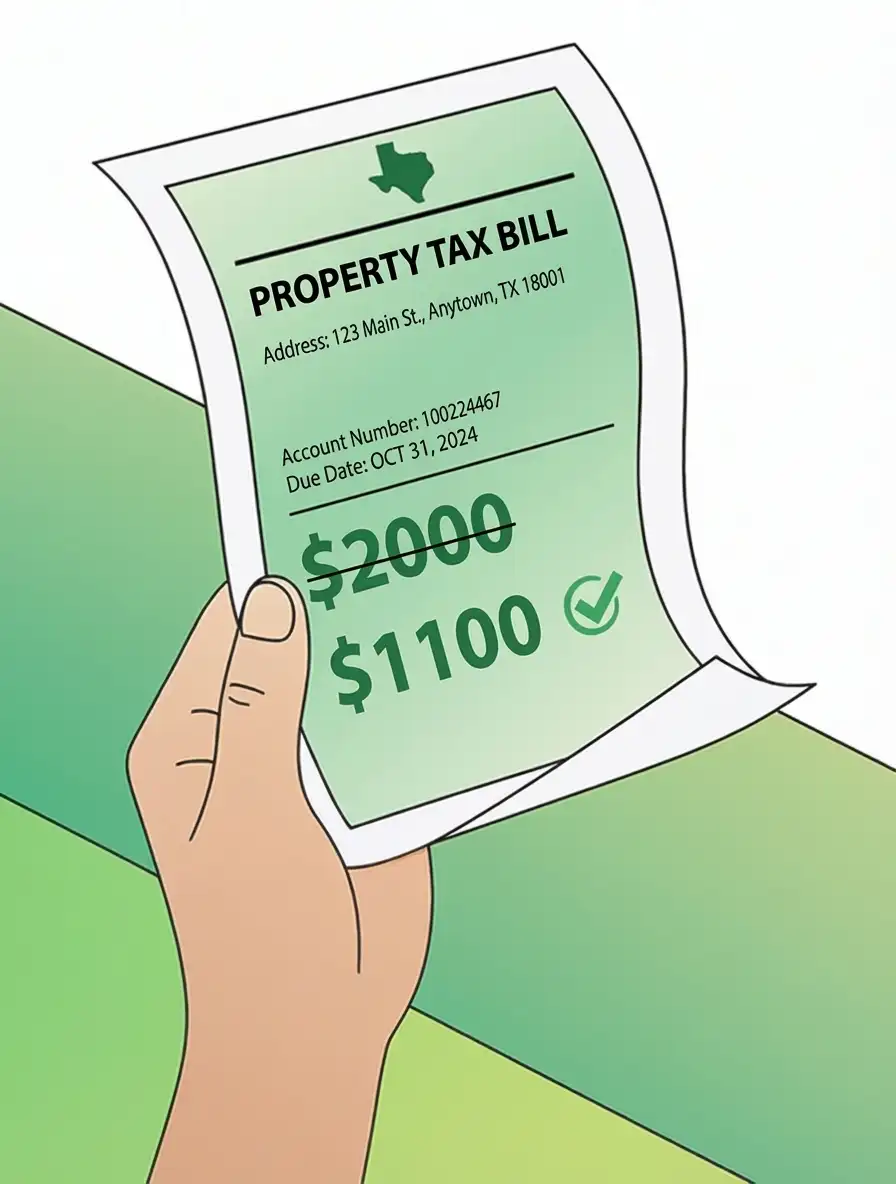







Property tax appraisals in Kimble County, Texas, may not tell the whole story about your home. Mass appraisal can miss needed repairs, dated interiors, or differences between neighborhoods. If your property is overappraised, it is worth reviewing the value before accepting it for another tax year.
A Kimble County property tax protest lets you challenge an appraisal you believe is incorrect. Start by checking your notice and property record, then gather comparable sales, appraisal comparisons, and condition evidence relevant to your case. Your local appraisal district provides the filing instructions. Preparing the evidence, responding to offers, and attending a hearing can take time, so start before your notice’s deadline.
TaxDrop helps Kimble County property owners explore their options for challenging an overappraisal. Use the local filing guide below to understand the process, or check your address with TaxDrop to see which services are available for your property. Review the available plan and pricing before choosing how to proceed.
Filing Deadlines:
Required Documents:
Where to Submit:
Kimble CAD, 501 Main St, Junction, TX 76849
Official resources:
Are you overpaying on property taxes? 92% of TaxDrop clients' closed 2026 Texas protests got a reduction. Free to check, and you only pay if you save.
⏰
🏠
💵
Step 1: Review Your Notice
Receive Notice of Appraised Value from Kimble CAD showing property valuation (mailed by April 15).
Step 2: File Your Protest
Submit Notice of Protest to Kimble CAD by May 15 or within 30 days of receiving notice.
Step 3: Evidence Submission
Provide comparable sales, appraisals, and documentation to support lower valuation.
Step 4: Informal Review
Meet with appraiser for informal discussion (optional but recommended).
Step 5: ARB Hearing
Present case to Appraisal Review Board panel if informal review unsuccessful (typically May-August).
Step 6: Decision & Adjustment
ARB issues written order; if successful, assessed value reduced and reflected in tax bill.
If you're staring at your latest Kimble County property tax bill wondering how it got so high, you're not alone. Junction homeowners are seeing increases of $300-800 this year alone, even though their home values haven't actually risen that much. The Kimble Central Appraisal District relies on automated valuation models that often miss crucial details about your specific property - that cracked foundation, the outdated kitchen, or the fact that comparable sales they're using aren't actually comparable at all.
Here's what most homeowners don't realize: the CAD expects you to challenge inflated assessments. They build in a buffer knowing that less than 3% of property owners will protest. That means 97% of Kimble County homeowners are likely paying more than their fair share, subsidizing everyone else's taxes. Your neighbors who protest annually? They're paying less while you pick up the slack.
Let's talk numbers that matter to your wallet. The median home in Junction is assessed around $125,000, but many properties are overvalued by $15,000-40,000. With Kimble County's combined tax rate of approximately 1.1%, that overassessment costs you $165-440 every single year. Over the life of your homeownership, that's potentially $5,000-15,000 in unnecessary taxes - money that could fund your retirement, your kids' college, or simply stay in your checking account where it belongs.
The protest deadline hits May 15th (or 30 days after you receive your notice). Miss it, and you're locked into overpaying for another full year. We've seen Junction homeowners discover they were overassessed by $25,000+ - that's $275 annually they'll never get back for each year they waited to protest.
You might be thinking, "Can't I just protest myself?" Technically, yes. But here's the reality: the Kimble Central Appraisal District processes thousands of protests. They know exactly which arguments work and which don't. They know which comparable sales to accept and which to reject. Most importantly, they know that 80% of homeowners who protest on their own either give up or accept minimal reductions because they don't understand the system.
Successful protests require specific market data, knowledge of Texas Property Tax Code, and understanding of how the Appraisal Review Board operates. You need to know which properties in Junction, Harper, and London actually compare to yours, how to present evidence the board will accept, and what arguments carry weight. That's not a criticism of your abilities - it's simply not your job to know this stuff.
We've streamlined the entire process so you can get back to your life while we handle the bureaucracy. After you provide basic property information (takes about 5 minutes), our licensed Texas property tax professionals analyze your assessment against actual market data from recent Kimble County sales. We identify every possible angle for reduction - from comparable sales analysis to property condition factors the CAD missed.
Then we file your formal protest with the Kimble Central Appraisal District, prepare all documentation, and if necessary, represent you at the Appraisal Review Board hearing. You don't attend meetings, you don't argue with appraisers, you don't stress about deadlines. We handle everything while you go about your normal routine. Most cases resolve within 60-90 days, and you'll receive updates throughout the process.
Based on our experience with Kimble County properties, here's what realistic savings look like for different home values. A $150,000 home overassessed by $30,000 saves about $330 per year. A $200,000 home overassessed by $40,000 saves roughly $440 annually. These aren't one-time savings - they compound year after year until your next reappraisal.
The math works heavily in your favor, which is exactly how it should be.
Every day you wait to address an inflated assessment costs you money. While you're researching and thinking it over, that May 15th deadline gets closer. The good news? Starting your Kimble County property tax protest takes just minutes, and you'll know within days whether you have a strong case. Most Junction area homeowners are pleasantly surprised to discover they've been overpaying by hundreds of dollars annually.
Your property tax bill doesn't have to be a source of annual frustration. Take five minutes to see if you're overpaying, then let us handle the rest.
See TaxDrop pricing for current plans.
The deadline to file a property tax protest in Kimble County is May 15th or 30 days after receiving your appraisal notice, whichever is later. Missing this deadline means you cannot challenge your property assessment for that tax year, potentially costing you hundreds or thousands in overpaid taxes. Always check your official notice from Kimble Central Appraisal District for your specific deadline date.
Visit kimblecad.org and use their property search tool to enter your address and view your current appraised value, tax history, and property details. This information helps you determine if your Junction or Kimble County property is overassessed compared to similar homes. Checking your value is the first step in deciding whether to file a property tax protest.
A successful protest reduces your property's assessed value, which directly lowers your annual tax bill and saves you money for years to come. The Kimble Central Appraisal District will issue a corrected notice showing your new, lower assessed value. This reduction continues each year unless your property value increases significantly or you make major improvements.
Yes, landlords and real estate investors can protest property taxes on rental properties and investment properties throughout Kimble County, including Junction, London, and Roosevelt. Reducing property taxes on investment properties improves cash flow and increases profitability significantly. The same protest process and deadlines apply to all residential properties, whether owner-occupied or rental.
For properties valued over $200,000 in Junction or Kimble County, professional help usually pays for itself through higher savings.
Your property may be overassessed if similar homes in Junction or nearby Kimble County areas recently sold for 10-15% less than your appraised value. Compare your assessment to recent sales of comparable properties with similar size, age, and features. Market downturns, property damage, or neighborhood changes can also indicate your assessment is too high.
Yes, TaxDrop manages the entire protest process including representing you at Appraisal Review Board hearings if needed, so you don't have to attend. Our licensed Texas property tax professionals prepare compelling evidence and present your case effectively to the board. We handle all paperwork, deadlines, and communication with Kimble Central Appraisal District throughout the process.
The property tax protest process in Kimble County typically takes 60-120 days from filing to resolution, depending on the Appraisal Review Board's schedule. Most cases are resolved through informal negotiations with the appraisal district before requiring a formal hearing. TaxDrop handles all timing and communications, keeping you updated on progress throughout the process.
Our system analyzes your property against recent sales data and market trends in Junction and Kimble County. If you qualify for savings, our licensed professionals handle everything from filing to final resolution.
Sign up and TaxDrop handles the paperwork, the evidence, and the filing. It takes less than 3 minutes to enroll.