

Key Takeaways:
Ownwell helps property owners seek lower property taxes through an appeal service. For New Jersey owners, the deciding issue is whether the service fits your county’s deadline, assessment-ratio rules, and representation needs. The best Ownwell alternative in 2026 is TaxDrop if you want a self-serve appeal packet; a New Jersey property-tax attorney is the better choice if you need legal representation.
TL;DR
- Comparing Ownwell alternatives New Jersey? TaxDrop One fits homeowners who want a self-serve property tax appeal packet.
- Choose a New Jersey property-tax attorney when you need legal representation rather than filing support.
- New Jersey appeals can increase assessments. Check the Chapter 123 ratio before deciding to file.
- Most New Jersey filing deadlines are April 1; Burlington, Gloucester, and Monmouth use January 15.
Why this matters
A smaller property-tax bill starts with a defensible assessment challenge, not a provider ranking. In New Jersey, your assessment—the taxable value assigned to your property—must be evaluated against your municipality’s assessment ratio, not just a home-value estimate.
The municipal Assessor sets your value. The County Board of Taxation hears the appeal. Those are different jobs, and knowing the difference helps you ask the right office about your assessment and filing requirements.
For a 2026 appeal, compare services on three questions: Who prepares the evidence? Who files the case? Who represents you if a hearing is necessary? A packet, an appeal service, and an attorney are not interchangeable.
Ownwell alternatives at a glance
This comparison separates the service models. It does not treat a national provider’s name as proof that it handles your New Jersey property or supplies legal representation.
Ownwell
- Best for: Owners considering a property-tax reduction service
- Standout feature: Focus on challenging property assessments
- What to check before choosing: Your address, engagement scope, filing responsibility, and representation
TaxDrop One
- Best for: Homeowners and landlords comfortable handling their own filing
- Standout feature: Self-serve appeal packet with free instant analysis first
- What to check before choosing: Whether you can manage submission, deadlines, and any hearing
New Jersey property-tax attorney
- Best for: Owners who need legal advice or representation
- Standout feature: Advice and representation tailored to the case
- What to check before choosing: Relevant experience, engagement terms, and who handles each stage
Direct self-filing
- Best for: Individual homeowners prepared to build their own case
- Standout feature: Control over evidence and submission
- What to check before choosing: County instructions, ratio analysis, and readiness to present sales evidence
Choose the service model before comparing company names. If you need someone to appear for you, eliminate packet-only options from that part of your shortlist. If you want preparation support but can manage the filing, evaluate a self-serve packet on that basis.
1. TaxDrop One: best for a supported self-serve appeal
TaxDrop One provides a self-serve property-tax appeal packet and operates statewide in New Jersey. You begin with free instant analysis, then decide whether a packet fits your assessment challenge. This is filing support, not a New Jersey full-service representation offer.
TaxDrop One is the best fit for New Jersey homeowners who want an appeal packet and will manage their own filing. A savings estimate takes under 2 minutes, but that estimate is a starting point—not a decision by the County Board of Taxation.
Where the service shines
- You can check your assessment before deciding whether to purchase a packet.
- Statewide New Jersey coverage avoids a county-by-county service-area search.
- The self-serve format fits owners who want preparation support while retaining control of submission.
- Homeowners and landlords can evaluate the same basic question: does the assessment justify an appeal?
Where the service falls short
- You remain responsible for meeting the filing deadline and following county instructions.
- A packet does not replace an attorney’s legal advice or hearing representation.
- An estimated reduction is not a guaranteed result.
- Buying preparation support does not remove New Jersey’s non-refundable filing fee or assessment-increase risk.
Head-to-head with Ownwell
Service model
- TaxDrop One: Self-serve appeal packet
- Ownwell: Property-tax reduction service; review the engagement scope
New Jersey coverage
- TaxDrop One: Statewide
- Ownwell: Confirm that your property is accepted
Owner’s role
- TaxDrop One: Manage filing and any required appearance
- Ownwell: Establish who handles filing and representation before signing
Initial decision
- TaxDrop One: Free instant analysis first
- Ownwell: Review the proposed service and terms
Do not apply the brand’s Texas full-service offer to your New Jersey property. The two service tiers have different coverage and responsibilities. In New Jersey, the relevant offer is the self-serve packet.
Best for: Owners who can follow filing instructions and want help preparing an assessment challenge.
Verdict: Buy only after the initial analysis and your county’s rules support filing.
2. New Jersey property-tax attorney: best for representation
A New Jersey property-tax attorney is the alternative to evaluate when your main need is legal judgment or representation. Ask the attorney to assess both sides of filing: the evidence for a reduction and the risk that the assessment increases. That review matters more than a promise of a smaller bill.
Choose based on relevant property-tax appeal experience, not a general practice description. Explain your property type, municipality, assessment, and filing date before agreeing to an engagement.
Where an attorney shines
- You can obtain legal advice about the Chapter 123 ratio test and filing risk.
- The engagement can include representation rather than document preparation alone.
- An attorney can explain which ownership structures require legal representation.
- You can establish responsibility for filings, communications, and the hearing in writing.
Where an attorney falls short
- Representation does not guarantee a reduction.
- You still need to supply accurate property information and supporting records.
- The engagement must specify which stages are included; do not assume every later proceeding is covered.
- A straightforward case still needs enough potential benefit to justify the work and expense.
Head-to-head with Ownwell
Main purpose
- New Jersey property-tax attorney: Legal advice and representation
- Ownwell: Property-tax reduction service
Selection test
- New Jersey property-tax attorney: Relevant legal experience and defined scope
- Ownwell: Property acceptance and defined service scope
Hearing responsibility
- New Jersey property-tax attorney: Establish representation in the engagement
- Ownwell: Establish representation in the engagement
Filing-risk review
- New Jersey property-tax attorney: Ask for advice specific to your assessment
- Ownwell: Ask how the service evaluates New Jersey filing risk
Before hiring, ask a direct question: “Who will represent me if the board schedules a hearing?” Get a direct answer. Evidence preparation and legal representation solve different problems.
Best for: Owners who need legal representation, have a disputed ratio issue, or own through an entity that requires counsel.
Verdict: Buy representation when your case requires it, not because a provider promises a win.
3. Direct self-filing: best for a prepared individual homeowner
Direct self-filing means you prepare the evidence, submit the appeal, and present your position yourself when permitted. It is a realistic option for an individual homeowner willing to study the county’s instructions and explain relevant sales. It is not a shortcut around the ratio test.
Start with the County Board of Taxation’s filing instructions. An owner’s ability to appear personally does not mean a company, partnership, or other entity has the same right; establish representation requirements before choosing this route.
Where self-filing shines
- You control the evidence and submission.
- You can explain factual errors about your own property directly.
- You can evaluate the county’s instructions before hiring a service.
Where self-filing falls short
- You must identify relevant sales and explain why they support your position.
- You bear responsibility for timely filing, required service, and hearing preparation.
- You do not receive professional representation simply by using the county’s forms.
Compared with Ownwell’s service model, direct self-filing puts the work and responsibility with you. Compared with a packet, it also puts evidence preparation with you.
Best for: Individual homeowners with a clear, supported case and time to prepare.
Verdict: Hold until you understand the ratio, evidence requirements, and filing obligations.
Why people switch from Ownwell
The useful reasons to compare Ownwell alternatives in New Jersey are service fit and responsibility—not unsupported claims about another provider’s results. For 2026, make the decision around the work you actually need someone else to do.
You want preparation support, not representation
A self-serve packet fits an owner who wants help organizing a challenge but is comfortable managing submission. Confirm that you can handle deadlines and a hearing before choosing that model. Do not select it merely because the purchase process is simple.
You need legal advice before filing
New Jersey’s assessment-ratio rules create a risk that a generic home-value comparison will miss. If you need advice about that risk or representation requirements, evaluate an attorney. A reduction estimate does not answer a legal question.
You need clearer responsibility
Ask each provider who gathers sales, signs documents, submits the petition, serves required parties, and attends the hearing. Put the answers beside each other. If a task remains with you, count it as part of your workload rather than assuming the service handles it.
Check these New Jersey rules before you file
A 2026 provider comparison is incomplete without a filing-risk check. These rules determine whether an appeal makes sense even when your home’s estimated market value has fallen.
Deadline check
The usual New Jersey filing deadline is April 1, but Burlington, Gloucester, and Monmouth use January 15. Confirm your county’s current instructions and any applicable exception with its County Board of Taxation. Do not treat April 1 as a statewide deadline.
Check the deadline before buying preparation support. Read the property-tax appeal deadline guide alongside your county’s instructions; the filing office’s requirements control your submission.
Ratio check
Chapter 123 compares the relationship between your assessment and the property’s true value with the municipality’s common level range—the acceptable band around its average assessment ratio. That band generally extends 15% above and below the average ratio.
An assessment below market value is not automatically correct, and a lower market-value estimate does not automatically establish a reduction. The ratio comparison is the deciding issue in an ordinary Chapter 123 case.
Filing can increase your assessment. When the relevant ratio falls below the common level range, the County Board of Taxation is required to increase the assessment under the applicable statutory rule. Obtain case-specific advice if you cannot determine where your property sits.
Sales evidence
Use comparable sales: completed transactions involving properties sufficiently similar to yours to support a value argument. Explain differences in location, size, condition, and other relevant features rather than presenting a list without context.
Comparable assessments are inadmissible in New Jersey. Your neighbor’s assessed value is not a substitute for sales evidence, and an unequal-assessment argument used in another state is not a New Jersey filing strategy.
Filing responsibility
New Jersey charges a non-refundable filing fee. Keep that separate from any provider’s service charge or payment promise. A no-reduction-no-service-fee offer does not make the county filing free.
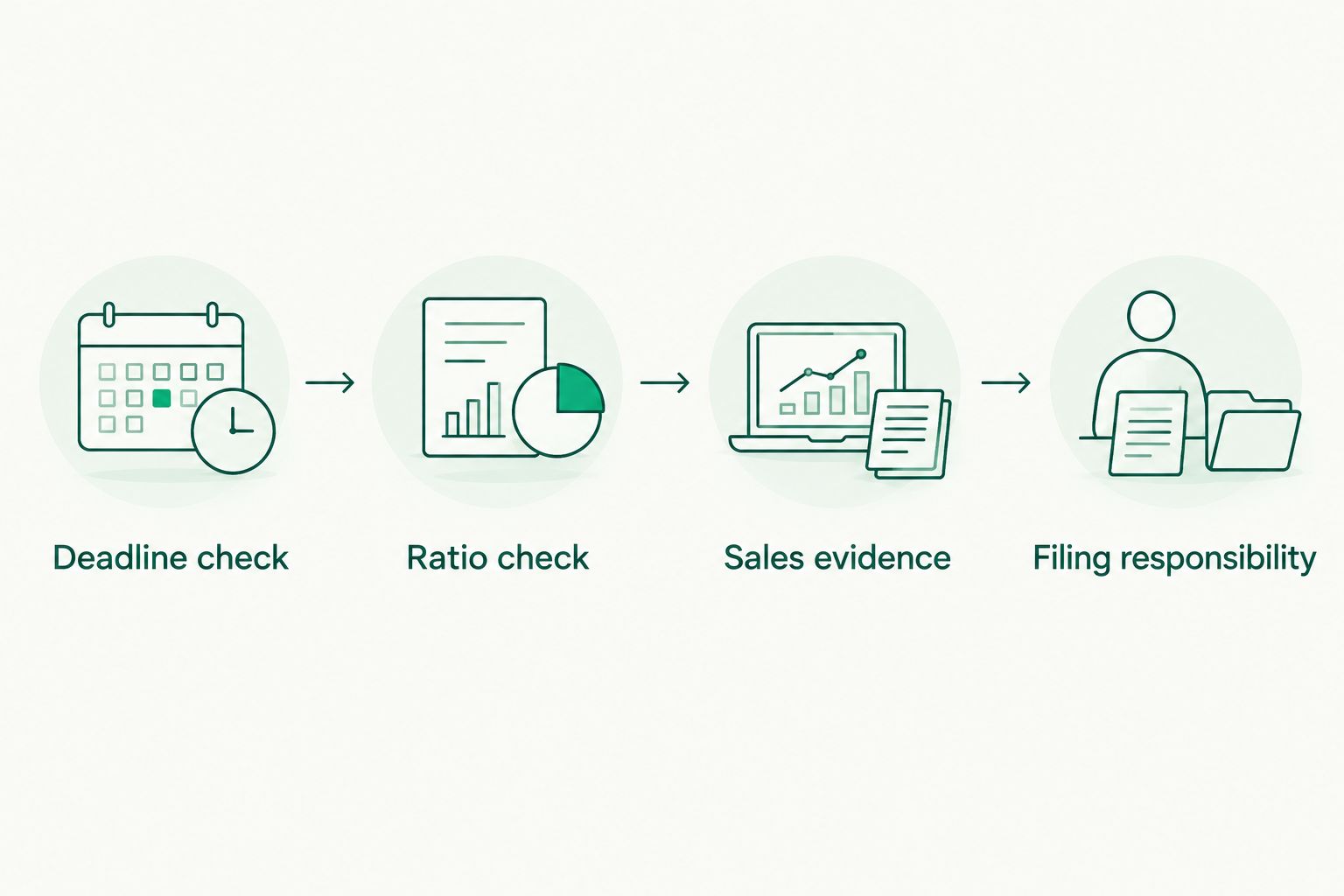
Check whether filing is justified before choosing who prepares the paperwork.
When staying with Ownwell is the right call
Stay with Ownwell if your property is accepted, the engagement covers the work you need, and responsibility for the New Jersey filing is clear. A different brand name alone is not a reason to change providers.
If you have already authorized someone to act, review that agreement before hiring another provider or submitting documents yourself. Establish who controls the filing and who communicates with the board. Two providers working without coordination do not improve your evidence.
For your 2026 decision, ask every option the same question: Does this arrangement give me the preparation and representation my case needs? Keep the current provider when the answer is yes; change the arrangement when the answer is no.
FAQ
What’s the best Ownwell alternative in New Jersey in 2026?
TaxDrop One is the best fit for owners who want a self-serve appeal packet and will manage their own filing. A New Jersey property-tax attorney is the better choice when you need legal representation.
Does TaxDrop provide full-service appeals in New Jersey?
No. Its New Jersey offer is TaxDrop One, a self-serve appeal packet; full-service coverage is limited to Texas.
Can a New Jersey property-tax appeal increase my assessment?
Yes. Under the applicable Chapter 123 rule, the County Board of Taxation must increase an assessment when the relevant ratio falls below the common level range. Check that risk before filing.
What is the New Jersey property-tax appeal deadline in 2026?
The usual deadline is April 1, but Burlington, Gloucester, and Monmouth use January 15. Confirm your county’s current instructions and any applicable exception with its County Board of Taxation.
Can I use my neighbor’s assessment as appeal evidence?
No. Comparable assessments are inadmissible in New Jersey; use relevant sales evidence to support your value argument.
Can I appeal my New Jersey assessment without a lawyer?
An individual homeowner can generally represent themselves before the County Board of Taxation. Entity-owned property has different representation requirements, so establish those requirements before choosing self-filing.
Is a New Jersey appeal free if I do not win?
No. New Jersey charges a non-refundable filing fee, separate from a provider’s service charges. Read both the county instructions and the provider’s payment terms.
One last thing
The lowest assessed value is not always the safest assessment to challenge. New Jersey’s ratio rules can turn an apparently attractive appeal into an increase. Before choosing an Ownwell alternative, establish that filing supports your goal of a smaller bill.
Use the initial assessment check to decide whether to investigate—not as a guarantee of savings. Then confirm the ratio, deadline, and evidence before committing to the filing.
Related guides
- How long a New Jersey property-tax appeal takes
- Is a flat-fee self-serve appeal packet worth it?
- Can you appeal property taxes without a lawyer?
Check your assessment
Start with free instant analysis before deciding whether a self-serve appeal packet fits your property.
Paying Too Much in Property Taxes?
Let our licensed property tax experts assess your tax bill for potential savings. Over 80% of protests get a reduction of more than $1,000 and it takes less than 3 minutes to enroll.
⏰
🏠
💵
No Savings No Fee